Injury Prevention for Soccer
Soccer has an overall injury rate of approximately 10-15 injuries per 1000 hours of playing hours (Junge 2000). In Australia, soccer ranks 5th for all injuries presenting to an emergency department. In addition, approximately 10% of all injuries are major injuries in which a player is sidelined for more than a month.
Why Injury Prevention?
- 91% of soccer players suffer some injury complaint related to soccer (Peterson 2000)
- Younger athletes are more prone to certain injuries due to their
growing bodies
- Bones are growing (bones>muscle>nerve)
- Muscle imbalances due to growth
- Bone cartilage is softer during growing stages
- High level soccer players are more at risk of injury than amateur level players (Inklaar 1996)
- Studies have shown that injury prevention programs are effective in reducing the incidence of injuries in soccer.
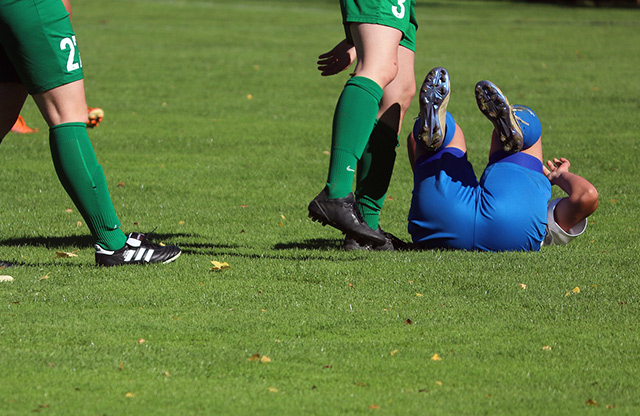 Injured soccer player
INJURIES
Traumatic
- Sprain
- Strain
- Contusion
- Fracture
- Dislocation
- Concussion
Non-traumatic (overuse)
- Osgood-Schlatter Disease
- Sever's Disease
- Patella Tendonosis
- Stress Fractures
- Shin Splints
WHERE?
- Lower limbs (70%)
- Upper limb (15%)
- Face (10%)
- Trunk (5%)
PREVENTION METHODS
Research has indicated that injury prevention measures are effective in reducing the number of injuries occurring during the soccer season (Junge 2002, Yeung 2001).
Taping
- You are more likely to re-roll your ankle after a previous ankle injury
- Taping has been shown to decrease the number of re-occurring ankle sprains in sports people
Equipment
- Mouth guards (high incidence of orofacial injuries in soccer)
- Shin guards (properly fitted/good quality)
- Shoes (painful feet/properly fitted/well kept - make sure you undo shoe laces)
Injury prevention exercises
- Specific exercises aimed at improving joint stability/flexibility, muscle strength, muscle coordination/balance, endurance, speed and agility can decrease the occurrence of injury (Junge 2002) (Boyle)
- These exercises are generally made more specific to sport in order to make them more effective in injury prevention
Similar exercises can be incorporated during training or during the warm-up
- Areas to include (examples)
- Sport specific cardio conditioning (use similar muscle groups)
- Flexibility
- Sport cord drills
- Strength specific to improve speed and agility
- Endurance exercises
- Plyometric
- Trunk stability
Related Pages
- Warming up for Soccer
- See the general Injury Prevention of the sports medicine section.
- Fitness testing for soccer/football
 Any comments, suggestions, or corrections? Please let us know.