Guide to Sit-Up Record Attempts
I have listed known world sit up records for various time periods and techniques. It is obvious that there is no universal way to do the sit-up and no central record keeping organization. The Guinness Book of Records has recorded some sit up records, and there are various websites that collect world record data.
Below is a summary of things you should consider when attempting a record, and some procedures that should be followed. Before you embark on a record attempt, you should contact the record keeping group for full details, so that you follow the correct technique and procedures to the letter - you don't want to go through all that effort in vain!
Record Attempt Instructions
These are just general guidelines for any world record attempt, and should not be seen as the official world record rules. You should find the full rules and determine the current record before any record attempt.
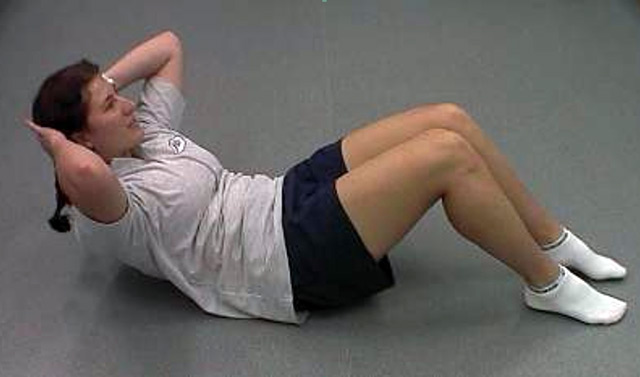 Technique
- The sit-ups should be performed with the knees bent at a 90 degree angle, with the hands behind or at the side of the head.
- In the 'up' position, the elbows must touch the thighs and the body should come up to about 90 degrees. In the 'down position', the shoulders must touch the ground.
- The feet can be either fixed or not. Some records are set using an "abdominal frame". Whatever technique is used must be clearly stated, and matching that for the record being attempted.
Recording
- At least two referees must count the sit-ups using a scoring sheet, and preferably be a certified fitness trainers or sports referees. If one referee does not allow a single sit-up (e.g. because the elbows did not touch the thighs), the sit-up does not count.
- The scoring sheet should record the start time and the timing of all stoppages. The number of reps during each set should also be recorded.
- At least one video (side view) of the whole attempt should be recorded, running continuously.
Timing
- Sit up world records usually count the maximum number of sit-ups you can do in a set time period, ranging from 1 minute up to several days.
- Rest breaks can be taken as often as you wish, but the timing will continue during the breaks.
- A running clock should be visible all the time in one of the videos.
Good luck!
Related Pages
- List of sit up world records
- Procedure for sit-up testing
- More Fitness Testing Records and other Sporting Records
- See Sit Up Videos
 Any comments, suggestions, or corrections? Please let us know.
Old Comments
Commenting is closed on this page, though you can read some previous comments below which may answer some of your questions.
- It sounds like i've been reading that the guiness book sounds like it is phony and staged. nobody is giving an accurate account and what i heard on t.v. doesn't correspond with the guinness book of world records. the people who judged the guiness book, r they taking a bribe, like others sports out there. (from andrew wojcian, Feb 2013)
- I have 18 weeks baby boy who can sit up for 5 mintues so i want to register his name in guinnes book for the worlds little baby who have started sitting under 18 weeks age (from pawandeep kaur, Dec 2012)