Dynamic Yo-Yo Test Calculator
Quick Answer
This calculator determines your Dynamic Yo-Yo Test score using the YYIR1 protocol timings. Results help soccer referees assess aerobic fitness and recovery capacity for match officiating.
- Calculates total distance from level and shuttle data instantly
- Estimates VO2max using the validated Bangsbo formula
- Provides fitness ratings based on referee performance standards
What is the Dynamic Yo-Yo Test?
The Dynamic Yo-Yo Test is an incremental fitness test designed to assess the aerobic fitness of soccer referees. The test involves running to various points around a football pitch, following cones marking each 20-meter interval. The test timings are based on the Yo-Yo Intermittent Recovery Test (Level 1).
Test purpose: The test evaluates a referee's ability to repeatedly perform job-specific intervals over a prolonged period of time, simulating the demands of officiating a soccer match.
Equipment required: Football field, marking cones, measuring tape, yo-yo (YYIR1) audio track mp3 (or use the Team BeepTest software), audio player, recording sheets.
Pre-test: Explain the test procedures to the referee. Perform screening of health risks and obtain informed consent. Prepare forms and record basic information such as age, height, body weight, gender, test conditions. Measure and mark out the test area. Perform an appropriate warm-up. See more details of pre-test procedures.
How to Set Up and Conduct the Test
Test layout: Place 16 marker cones exactly 20 meters apart around a football pitch, as shown in the image below.
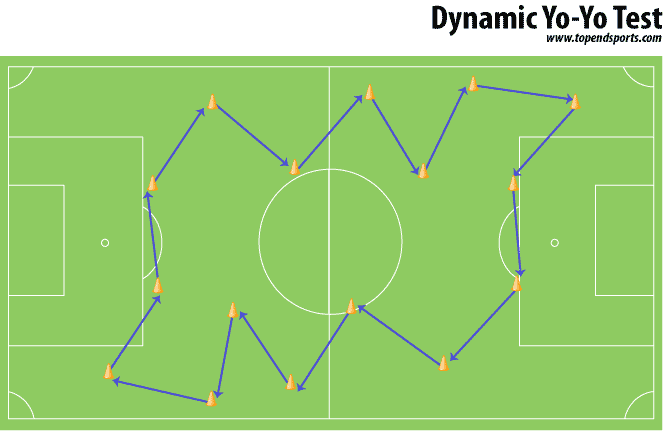
Procedure: If testing a group of referees, they can be spread out to start running from different markers. The participant starts from one marker, and begins running forwards 20 meters to the next cone when instructed by the audio track. The referee turns when signaled by the recorded beep and continues for a total of 40m. There is a 10 second active recovery period after every 40 meters, during which the referee must wait at the marker. The test continues until they are unable to keep up with the audio recording. A warning is given when the referee does not reach the marker in the allocated time, and the referee is removed the next time they do not complete a successful shuttle.
Scoring: The referee's score is the total distance covered before they were unable to keep up with the recording. The same audio recording as for the YYIR1 is used, with the speed levels and the number of shuttles at each level being the same.
Understanding Your Results
The Dynamic Yo-Yo Test results can be expressed in three ways: as a speed level and shuttle number (e.g., 17.4), as total distance covered in meters, or as an estimated VO2max value. Our calculator above handles all these conversions automatically.
Distance Calculation
Each shuttle covers 40 meters (20m out, 20m back). Total distance is calculated by multiplying the number of completed shuttles by 40. For example, completing 30 shuttles equals 1,200 meters.
VO2max Estimation
The calculator uses the scientifically validated Bangsbo formula:
VO2max (ml/kg/min) = distance (m) × 0.0084 + 36.4
This formula was published by Bangsbo et al. (2008) in Sports Medicine and has been validated for intermittent recovery testing in team sport athletes.
Referee Fitness Standards
| Rating | Distance (m) | Speed Level | Est. VO2max | Referee Level |
|---|---|---|---|---|
| Elite | 2,400+ | 20.1+ | 56.6+ | FIFA International |
| Excellent | 2,000-2,399 | 18.7-20.0 | 53.2-56.5 | National Panel |
| Good | 1,600-1,999 | 17.5-18.6 | 49.8-53.1 | Regional/Category 1 |
| Average | 1,200-1,599 | 16.3-17.4 | 46.5-49.7 | Local Level |
| Below Average | 800-1,199 | 15.1-16.2 | 43.1-46.4 | Development |
| Poor | <800 | <15.1 | <43.1 | Requires improvement |
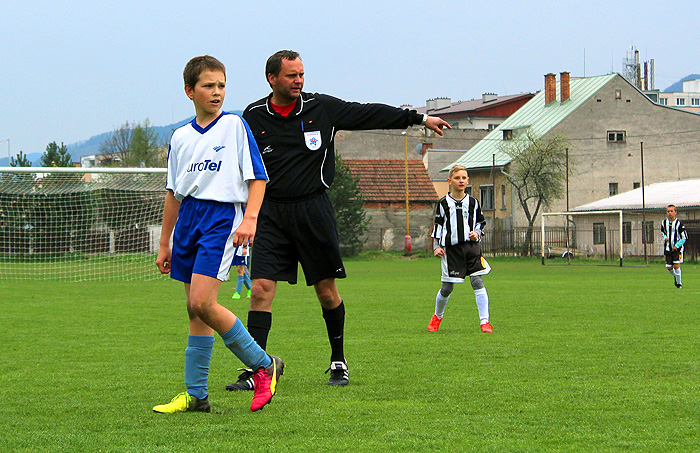
Football referee - the Dynamic Yo-Yo Test assesses the fitness demands of match officiating
Test Reliability and Validity
Reliability: Some practice and familiarization with the pacing may be required. Test reliability would depend on how strictly the test is run, and the previous practice allowed for the referees.
Advantages: Large groups can perform this test all at once for minimal costs. The sport-specific layout around a football pitch provides better face validity for soccer referees compared to standard shuttle tests.
Disadvantages: Practice and motivation levels can influence the score attained, and the scoring of when a person is out of the test can be subjective. As the test is usually conducted outside, the environmental conditions can also affect the results. The test audio track must be purchased.
Comments: This test is not easy to set up and conduct, which may explain why it is not commonly used. Although there seems to be some face validity relating to soccer referees, there have been no research studies found validating this test independently from the YYIR1.
Sport-Specific Applications
Target population: This test was specifically designed for football/soccer referees. The layout and movement patterns closely simulate the running demands referees experience during competitive matches.
Soccer Referees
Primary target for this test. Referees cover 9-13 km during a 90-minute match with frequent changes of direction and intensity.
Assistant Referees
May use the ARIET test which includes lateral movement patterns specific to sideline officiating.
Team Sport Athletes
Soccer, rugby, hockey, and basketball players can use YYIR1 for intermittent fitness assessment.
How to Improve Your Score
Improving your Dynamic Yo-Yo Test performance requires targeted training that develops both aerobic capacity and recovery ability. Here are evidence-based strategies for referees:
Interval Training
Perform high-intensity interval training (HIIT) 2-3 times per week. Example session: 10-15 × 40m runs at test pace with 10-second recovery between each, progressing to faster speeds as fitness improves.
Tempo Runs
Include 20-30 minute continuous runs at 75-85% of maximum heart rate to build aerobic base. This should be done 1-2 times per week during the off-season.
Sport-Specific Practice
Practice the actual test protocol regularly to improve pacing awareness and movement efficiency. Familiarity with the audio cues and turning technique can significantly impact scores.
Recovery Optimization
Focus on improving recovery between efforts through proper nutrition, hydration, and sleep. Active recovery techniques and adequate rest between training sessions are essential.
Frequently Asked Questions
What is a good Dynamic Yo-Yo Test score for a soccer referee?
A good score for soccer referees is typically 1,200-1,600 meters (speed level 16-17). Elite FIFA referees often achieve 2,000+ meters. The minimum acceptable score varies by referee level and governing body requirements, with international referees expected to reach higher standards.
How is the Dynamic Yo-Yo Test different from the standard YYIR1?
The Dynamic Yo-Yo Test uses the same audio timings as YYIR1 but is conducted around a football pitch with 16 cones placed 20 meters apart. This makes it more sport-specific for soccer referees who must cover similar patterns during matches, rather than running back and forth on a straight 20-meter course.
How do you calculate VO2max from the Dynamic Yo-Yo Test?
VO2max is estimated using the Bangsbo formula: VO2max (ml/kg/min) = distance (m) × 0.0084 + 36.4. For example, if you complete 1,600 meters, your estimated VO2max would be 1600 × 0.0084 + 36.4 = 49.84 ml/kg/min. This formula was validated for the YYIR1 test protocol.
How often should referees take the Dynamic Yo-Yo Test?
Soccer referees typically undergo fitness testing at the start of each season and may have additional mid-season assessments depending on their level. Regular training should include intermittent running to prepare for these tests, with practice tests conducted monthly during preparation phases.
What equipment is needed for the Dynamic Yo-Yo Test?
You need a football field, 16 marking cones placed 20 meters apart around the pitch perimeter, measuring tape for accurate placement, the YYIR1 audio track (mp3), an audio player with adequate volume, and recording sheets. The Team BeepTest software can also run the test timings.
Can I use a different yo-yo test audio for the Dynamic Yo-Yo Test?
No, the Dynamic Yo-Yo Test specifically uses the YYIR1 (Yo-Yo Intermittent Recovery Test Level 1) audio track. Using Level 2 or the Endurance versions would change the test protocol and make results incomparable. Always ensure you're using the correct audio file.
Why does my score vary between test attempts?
Score variations can result from several factors: environmental conditions (temperature, wind, surface), fatigue from recent training, hydration and nutrition status, motivation level, and familiarity with the test. Standardizing these factors improves test reliability.
Similar Tests
- Yo-Yo Intermittent Recovery Test — the standard YYIR1 and YYIR2 tests
- Assistant Referee Intermittent Endurance Test (ARIET) — based on the Yo-Yo Intermittent Recovery Test (Level 2), involving forwards and sideways running
- FIFA Change of Direction Ability (CODA) Test — forwards and sideways running over 8-10 meters
- Loughborough Intermittent Shuttle Test for soccer players
References
- Bangsbo, J., Iaia, F. M., & Krustrup, P. (2008). "The Yo-Yo Intermittent Recovery Test: A Useful Tool for Evaluation of Physical Performance in Intermittent Sports." Sports Medicine, 38(1), 37-51.
- Castagna, C., Impellizzeri, F. M., Chamari, K., Carlomagno, D., & Rampinini, E. (2006). "Aerobic fitness and yo-yo continuous and intermittent tests performances in soccer players: a correlation study." The Journal of Strength & Conditioning Research, 20(2), 320-325.
- Krustrup, P., Mohr, M., Amstrup, T., Rysgaard, T., Johansen, J., Steensberg, A., ... & Bangsbo, J. (2003). "The yo-yo intermittent recovery test: physiological response, reliability, and validity." Medicine and Science in Sports and Exercise, 35(4), 697-705.
- Weston, M., Castagna, C., Impellizzeri, F. M., Rampinini, E., & Abt, G. (2007). "Analysis of physical match performance in English Premier League soccer referees with particular reference to first half and player work rates." Journal of Science and Medicine in Sport, 10(6), 390-397.
- FIFA. (2016). "Fitness Tests for Match Officials." FIFA Refereeing. Zurich: Fédération Internationale de Football Association.
- Mallo, J., Navarro, E., García-Aranda, J. M., Gilis, B., & Helsen, W. (2007). "Activity profile of top-class association football referees in relation to performance in selected physical tests." Journal of Sports Sciences, 25(7), 805-813.
Related Pages
- Fitness Testing for Intermittent Sports
- Beep Test Software — run the standard beep test and yo-yo tests on your PC or Laptop, with many additional features.
- Tables of the distance covered for each speed level for each level of the Yo-Yo Intermittent Recovery Test
- Buying the yo-yo test
- FIFA Testing for Referees
- Fitness Tests for field officials (umpires, referees)
- Testing Protocols for Sports Officials
- About fitness testing for soccer.
- Nutrition for Field Officials, Referees and Umpires
- About Testing for Intermittent Sports
 Any comments, suggestions, or corrections? Please let us know.