Energy Expenditure Measurement during Exercise Using Direct Calorimetry
Human Whole Body Direct Calorimetry obtains a direct measurement of the energy use of the body by measuring the amount of heat generated by the body. To do this, the body is fully enclosed in a structure and the heat from the body changes the temperature of the space, which is then measured, usually by changes in the temperature of water flowing through the walls.
Although this method is most commonly used in a resting situation, it has been used in research situations for determining energy expenditure during exercise. This requires a calorimeter large enough to permit activity. The problems of using a calorimeter of this type is that the participants must remain in the confined space for long periods for accurate measurement. Also, there can be extra error using exercise equipment, as friction generates heat too, and the chnage sin heat by the evaporation of sweat can cause additional errors.
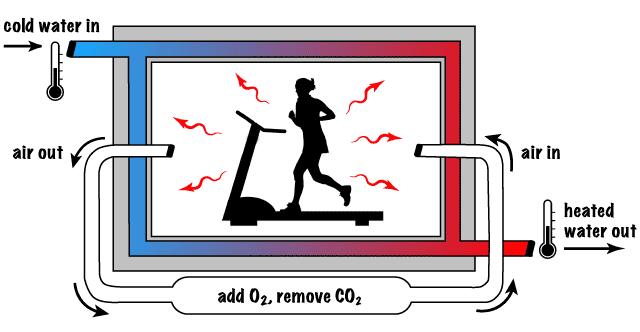 direct calorimetry set-up
 Although direct calorimetry provides a measure of the total body energy expenditure, it does not provide any information about the nature of substrates that are being oxidized to generate the energy within the body. An alternative method, indirect calorimetry, provides a more reliable method of assessing energy consumption, particularly during exercise, and with the determination of the respiratory exchange ratio, can also estimate the contribution of fats and carbohydrates for energy production.
Related Pages
- Measuring oxygen consumption by indirect calorimetry
- Direct calorimetry method for resting metabolism measurement.
- Procedure for measuring VO2max
- Adult VO2maxnorm values.
- Videos of VO2max Tests being performed.
- Measuring Daily Energy Expenditure using a Pedometer — by counting steps you can estimate how much energy you are using.
- Methods for heart rate measurement, if heart rate measurement is also required.
- Ratings of Perceived Exertion Scale if you want to quantify effort during the assessment.
 Any comments, suggestions, or corrections? Please let us know.