Calf Muscle Flexibility Test Calculator
Quick Answer
This calculator assesses your calf muscle flexibility using the knee-to-wall (weight-bearing lunge) test. Enter your measurements to compare against research-based normative data and identify potential asymmetries between legs.
- Normal range: 10-15 cm toe-to-wall distance
- Each 1 cm equals approximately 3.6° of ankle dorsiflexion
- Asymmetry greater than 1.5 cm may indicate injury risk
The Calf Muscle Flexibility Test, also known as the knee-to-wall test or weight-bearing lunge test (WBLT), is a simple indirect flexibility test of the calf muscles. This assessment measures ankle dorsiflexion range of motion, which is critical for athletic performance and injury prevention. The test requires only a wall and a ruler, making it accessible for athletes, coaches, and fitness professionals to conduct anywhere.
How to Perform the Calf Muscle Flexibility Test
Equipment required: A wall and a ruler or tape measure.
Pre-test preparation: Explain the test procedures to the subject. Perform screening of health risks and obtain informed consent. Prepare forms and record basic information such as age, height, body weight, gender, and test conditions. See more details of pre-test procedures.
Test procedure:
- Stand facing a wall with one foot forward and the other foot approximately 30cm behind for balance
- Place the front foot with your big toe approximately 10cm from the wall
- Keep both feet pointing straight ahead (toes facing the wall)
- Keeping the heel of the front foot firmly on the ground, bend at the knee and attempt to touch the knee to the wall
- If successful, move your foot further away from the wall and try again
- Continue moving back until you can just touch the wall with your knee while keeping your heel down
- Measure the distance from the front of your big toe to the wall at this maximum position
- Repeat the same procedure for each leg, performing three trials and recording the best result
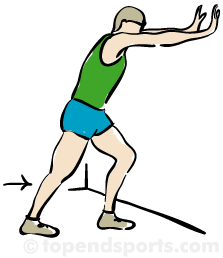
Scoring: Measure the maximum distance from the toe to the wall in centimeters. The calculator above provides interpretation based on published normative data from research studies.
Understanding Your Calf Flexibility Results
Research has established normative values for the weight-bearing lunge test that allow meaningful comparison of your results:
| Category | Males (cm) | Females (cm) | Interpretation |
|---|---|---|---|
| Excellent | >15.0 | >14.0 | Above average flexibility, optimal for most sports |
| Normal | 13.6-15.0 | 12.1-14.0 | Within expected range for healthy adults |
| Below Average | 10.0-13.5 | 9.0-12.0 | May benefit from regular stretching |
| Restricted | <10.0 | <9.0 | Limited flexibility, increased injury risk |
These normative ranges are derived from research by Gohil et al. (2022) studying adults aged 20-30 years using the weight-bearing lunge test. Each centimeter of distance corresponds to approximately 3.6 degrees of ankle dorsiflexion according to Bennell et al. (1998).
Why Calf Flexibility Matters for Athletes
The calf muscles consist of two primary muscles: the gastrocnemius (the larger, visible muscle) and the soleus (located beneath). Together, they form the triceps surae and attach to the Achilles tendon. Adequate flexibility in these muscles is essential for:
🏃 Running Performance
Limited ankle dorsiflexion forces compensatory movement patterns that reduce running efficiency and stride length. Athletes with restricted calf flexibility may develop altered gait mechanics.
⚡ Jumping Ability
Research shows athletes with knee-to-wall distances below 10cm demonstrate significantly reduced standing long jump performance and slower sprint times.
🛡️ Injury Prevention
Restricted dorsiflexion is linked to increased risk of ACL injuries, ankle sprains, Achilles tendinopathy, plantar fasciitis, and stress fractures. Runners with limited dorsiflexion are 2.5 times more likely to experience knee pain.
🎯 Movement Quality
Proper ankle mobility allows better force absorption during landing, deeper squat positions, and reduced compensatory knee valgus (inward knee collapse) during athletic movements.
Sport-Specific Considerations
Different sports place varying demands on calf flexibility:
Running and Endurance Sports: Adequate dorsiflexion is critical for efficient toe-off mechanics and shock absorption. Limited flexibility may contribute to shin splints, Achilles problems, and altered hip mechanics during fatigue.
Court Sports (Basketball, Volleyball, Tennis): Explosive jumping and rapid direction changes require excellent ankle mobility. Athletes in these sports should aim for the upper end of normal ranges (>12-13cm).
Soccer and Football: Young soccer players often show reduced ankle mobility compared to other sports, possibly due to repeated kicking motions. Regular screening and stretching programs are particularly important.
Weightlifting and CrossFit: Deep squats require substantial ankle dorsiflexion. Athletes with restricted flexibility often compensate with excessive forward lean or heel elevation.
Differences Between Gastrocnemius and Soleus Testing
The knee-to-wall test performed with a bent knee (as described above) primarily assesses the soleus muscle, which does not cross the knee joint. To differentiate between gastrocnemius and soleus tightness, the Silfverskiöld test compares dorsiflexion with the knee extended versus flexed:
If dorsiflexion increases significantly when the knee is bent, the gastrocnemius (which crosses both the knee and ankle) is tight. If there is no significant change between knee positions, restriction may be in the soleus or ankle joint structures.
Limitations of the Test
Leg length variations: Differences in leg length can make comparisons between individuals misleading. Unless testing a fairly homogeneous group, it is best to use this test to monitor changes over time in the same individual rather than comparing between different athletes.
Foot position: Allowing the foot to turn outward during testing can give a false impression of good calf length. Ensure the foot remains pointing straight ahead throughout the test.
Weight-bearing considerations: The test is performed in weight-bearing, which means results may be influenced by body weight and loading tolerance in addition to pure muscle flexibility.
How to Improve Calf Muscle Flexibility
If your results indicate restricted or below-average flexibility, consider implementing these evidence-based strategies:
Static Stretching Protocol
Hold calf stretches for a minimum of 2 minutes per leg, 4 times daily. Research indicates this duration is necessary to create lasting changes in muscle length rather than temporary relief. Stretch before bed to allow tissue repair in the lengthened position.
Foam Rolling
Use a foam roller or lacrosse ball on the gastrocnemius and soleus for 2 minutes per leg. Focus on the lower calf near the Achilles tendon, which commonly develops tightness from running.
Eccentric Exercises
Perform heel drops off a step, lowering slowly over 3-4 seconds. This builds both strength and flexibility while loading the tissue appropriately.
Mobility Work
Include ankle circles, alphabet tracing with your foot, and banded ankle mobilizations to address joint restrictions in addition to muscle tightness.
Retest frequency: Assess calf flexibility every 1-2 weeks during an intensive stretching program to track improvements. Expect gradual progress over 4-8 weeks with consistent daily stretching.
Frequently Asked Questions
What is a normal calf flexibility measurement?
Normal calf flexibility measured by the knee-to-wall test is typically 10-15 cm for most adults. Research indicates males average 13.6-14.9 cm while females average 12.1-13.9 cm. A measurement below 9-10 cm suggests restricted calf muscle flexibility that may benefit from stretching.
How do I perform the calf muscle flexibility test correctly?
Stand facing a wall with one foot forward. Keep your heel on the ground and bend your knee to touch the wall. Move your foot back until your knee can just touch the wall without lifting your heel. Measure the distance from your big toe to the wall in centimeters. Ensure your foot points straight ahead and does not rotate outward during testing.
What causes tight calf muscles in athletes?
Tight calf muscles commonly result from repetitive high-impact activities like running and jumping, inadequate stretching routines, muscle imbalances, or previous injuries that were not fully rehabilitated. Sports requiring explosive movements such as sprinting, basketball, and soccer often lead to progressive calf tightness over time.
How often should I test my calf flexibility?
Athletes should test calf flexibility every 2-4 weeks to monitor progress during normal training. During intensive stretching programs or injury rehabilitation, weekly testing helps track improvements more precisely. Always test at the same time of day for consistent comparisons.
What is the relationship between calf flexibility and ankle dorsiflexion?
Each centimeter of distance in the knee-to-wall test corresponds to approximately 3.6 degrees of ankle dorsiflexion. Limited calf flexibility directly restricts dorsiflexion range, which can affect running mechanics, jumping ability, squat depth, and increase injury risk throughout the lower extremity.
What asymmetry between legs is considered normal?
A difference of up to 1.5 cm between legs is typically within normal range for healthy adults. Asymmetries greater than 2-3 cm may indicate flexibility imbalances that could increase injury risk. If one leg is significantly tighter, stretch that leg with an extra repetition during your routine.
How can I improve my calf flexibility?
Improve calf flexibility through daily stretching holding each stretch for 2 minutes minimum, foam rolling the gastrocnemius and soleus muscles, and eccentric calf exercises on a step. Stretching before bed is particularly effective as tissue repairs in the lengthened position overnight. Expect improvement over 4-8 weeks with consistent daily practice.
References
- Bennell, K.L., Talbot, R.C., Wajswelner, H., Techovanich, W., Kelly, D.H., & Hall, A.J. (1998). "Intra-rater and inter-rater reliability of a weight-bearing lunge measure of ankle dorsiflexion." Australian Journal of Physiotherapy, 44(3), 175-180.
- Gohil, R., et al. (2022). "Normative data for calf muscle flexibility tested by weight bearing lunge test in age group of 20-30 years." International Journal of Health Sciences and Research, 12(2).
- Hoch, M.C., & McKeon, P.O. (2011). "Normative range of weight-bearing lunge test performance asymmetry in healthy adults." Manual Therapy, 16(5), 516-519.
- Powden, C.J., Hoch, J.M., & Hoch, M.C. (2015). "Reliability and minimal detectable change of the weight-bearing lunge test: a systematic review." Manual Therapy, 20(4), 524-532.
- DiGiovanni, C.W., et al. (2002). "Isolated gastrocnemius tightness." Journal of Bone and Joint Surgery, 84(6), 962-970.
- Almansoof, H.S., Nuhmani, S., & Muaidi, Q. (2023). "Role of ankle dorsiflexion in sports performance and injury risk: A narrative review." Electronic Journal of General Medicine, 20(5).
- Pope, R., Herbert, R., & Kirwan, J. (1998). "Effect of ankle dorsiflexion range and pre-exercise calf muscle stretching on injury risk in Army recruits." Australian Physiotherapy, 44(3), 165-172.
- Cerrillo-Sanchis, J., et al. (2024). "Relationship between ankle dorsiflexion range of motion and sprinting and jumping ability in young athletes." Journal of Bodywork and Movement Therapies, 39, 43-49.
Similar Tests
- Side-Bending Test
- Floor Touch Test (Kraus-Webber)
Related Pages
Flexibility Tests
Explore our complete list of flexibility assessments for different muscle groups and joints.
View All Flexibility Tests →Calf Stretches
Learn effective stretching exercises to improve your calf muscle flexibility.
See Calf Stretches → Any comments, suggestions, or corrections? Please let us know.