Posture Assessment Calculator for Athletes
Quick Answer
This posture assessment calculator uses the validated New York Posture Rating (NYPR) scale to evaluate 13 body segments. Rate each segment from posterior and lateral views to identify postural deviations that may affect athletic performance.
- Evaluates 6 posterior segments (head, shoulders, spine, hips, feet, arches)
- Evaluates 7 lateral segments (neck, chest, shoulders, upper back, trunk, abdomen, lower back)
- Scores range from 13 (poor) to 65 (excellent posture)
How Does Posture Testing Work?
Posture testing can be useful for identifying and correcting postural deviations, and for prescribing exercise to correct posture or which is appropriate for a particular posture type. Postural deviations may be a result of muscle imbalances and tightness and weakness of particular joints and muscles. The method described uses a grid placed behind the subject.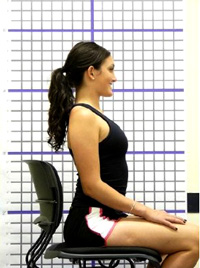
Purpose: To assess posture using a standardized method that identifies alignment issues affecting athletic performance and injury risk.
Equipment required: Posture assessment grid (or similar wall with markings), camera (optional for documentation), plumb line (recommended)
Procedure: Shoes should be removed and minimal clothing worn. The subject stands at a set distance in front of a posture grid, in a natural and relaxed stance. Using a camera to capture the image makes for easier analysis, though the assessment can also be done visually without a photo. The body alignment is checked against the horizontal or vertical lines. Check the alignment of the head, neck, spine, shoulders, hips, legs, ankles etc. Repeat the assessment to compare the participant's front, side and back posture.
Results: This assessment can reveal a stiff or hypermobile spine, tight muscles, kyphosis, lordosis, scoliosis/spinal curvature, rounded shoulders, hyperextended joints, and an array of other alignment issues that impact athletic performance.
Comments:
- Keep the procedure standard in case you wish to repeat the procedure in future to assess changes in posture.
- The posture grid can also be used for range-of-motion (flexibility) measurements.
- For athletes, postural assessment should be part of regular pre-season screening.
What is the NYPR Posture Scale?
The New York Posture Rating (NYPR) scale was originally published in 1958 as part of the New York Physical Fitness Test battery developed by the New York State Education Department. It provides a quantitative approach to assess proper and improper alignment of various body segments for individuals standing in the anatomical position.
The original NYPR evaluates 13 body alignment segments including posterior views of the head, shoulders, spine, hips, feet, and arches, plus lateral (side) views of the neck, chest, shoulders, upper back, trunk, abdomen, and lower back. Each segment is scored as good (5 points), fair (3 points), or poor (1 point), giving a total score range of 13-65 points.
Research by Arnold et al. (2000) found the NYPR has moderate intrarater reliability (0.70) and the scale is more reliable when the same trained rater conducts repeated evaluations. Hennessey and Watson (1993) used the NYPR to assess posture of injured and non-injured athletes, finding that poorer low back posture was associated with hamstring injuries.
Why Does Posture Matter for Athletes?
According to sports science expert Robert Wood, who has analyzed sports performance data for over 25 years, postural alignment directly impacts athletic performance in several critical ways:
"Poor posture doesn't just affect how an athlete looks—it fundamentally alters how efficiently the body can generate power, maintain stability, and resist injury-causing forces. Addressing postural deviations can improve performance by 10-15% in many sports."— Robert J. Wood, PhD, Founder of Topend Sports
Breathing Efficiency: Poor posture, particularly rounded shoulders and forward head position, can restrict pulmonary capacity by up to 30%. This reduction directly impacts oxygen delivery to working muscles during exercise.
Power Generation: Optimal alignment allows muscles to contract through their full range of motion, maximizing force production. Postural deviations create compensatory patterns that leak power.
Injury Prevention: Research shows correlations between posture and injury risk. Athletes with poor low back posture show higher rates of hamstring injuries, while shoulder imbalances increase risk of rotator cuff problems.
Sport-Specific Postural Considerations
Different sports create unique postural adaptations that coaches and athletes should monitor:
Swimming: Swimmers often develop kyphotic (rounded) thoracic spines from hours of reaching overhead. Regular assessment helps prevent this from becoming problematic.
Cycling: The forward-flexed position can lead to shortened hip flexors and tight chest muscles. Cyclists benefit from specific mobility work targeting these areas.
Throwing Sports: Baseball pitchers, tennis players, and javelin throwers commonly show asymmetric shoulder positions. One shoulder may be dropped significantly compared to the other.
Running: Anterior pelvic tilt is common in runners due to quad dominance and tight hip flexors. This can contribute to lower back pain and reduced stride efficiency.
Weightlifting: Heavy lifting can create both positive adaptations (core strength) and negative patterns (excessive lordosis) depending on technique and training balance.
Contact Sports: Athletes in football, rugby, and hockey require assessment of shoulder position for tackling mechanics and neck positioning for concussion risk reduction.
Understanding Your Posture Score
The NYPR scale provides total scores that can be interpreted as follows:
How to Improve Your Posture Score
Based on your assessment results, consider these evidence-based strategies:
For Forward Head Posture: Chin tucks, cervical retraction exercises, and reducing screen time. Strengthening deep neck flexors while stretching suboccipital muscles.
For Rounded Shoulders: Wall angels, band pull-aparts, and face pulls. Stretching pectorals and anterior deltoids while strengthening rhomboids and lower trapezius.
For Excessive Lordosis: Dead bugs, bird-dogs, and pelvic tilts. Strengthening glutes and core while stretching hip flexors and lower back extensors.
For Kyphosis: Thoracic extensions over foam roller, prone Y-T-W exercises, and cat-cow stretches. Focus on thoracic mobility and scapular stability.
Pro Tip: The most effective posture correction combines strengthening weak muscles with stretching tight ones. Aim for 15-20 minutes of targeted mobility work daily rather than lengthy sessions less frequently.
Frequently Asked Questions
What is the New York Posture Rating (NYPR) scale?
The NYPR is a validated posture assessment tool originally published in 1958 that evaluates 13 body segments from posterior and lateral views. Each segment is scored as good (5 points), fair (3 points), or poor (1 point), with total scores ranging from 13-65. It has been used extensively in clinical and athletic settings for over 60 years.
What is a good posture score for athletes?
A total NYPR score of 55-65 indicates excellent posture with minimal deviations optimal for athletic performance. Scores of 45-54 represent good posture with minor issues, 35-44 indicate fair posture needing attention, and scores below 35 suggest poor posture requiring corrective intervention before intensive training.
How often should athletes assess their posture?
Athletes should assess posture every 3-6 months as part of regular monitoring, or more frequently during periods of intensive training, after injury recovery, or when experiencing pain. Pre-season screening should always include postural assessment. Regular monitoring helps identify developing imbalances before they cause performance issues or injuries.
Can poor posture affect athletic performance?
Yes, poor posture significantly impacts athletic performance by reducing breathing efficiency (up to 30% decrease in lung capacity), limiting range of motion, creating muscle imbalances, and increasing injury risk. Research shows athletes with postural deviations have higher injury rates and reduced power output. Correcting postural issues can improve performance by 10-15%.
What equipment is needed for posture assessment?
Basic posture assessment requires a posture assessment grid or plain wall with horizontal/vertical markings, and optionally a camera for documentation and a plumb line for reference. The subject stands 10 feet from the grid in minimal clothing while the assessor evaluates alignment from posterior and lateral views.
How reliable is the NYPR posture assessment?
Research shows the NYPR has moderate to good reliability, with intrarater correlation coefficients of 0.70 and interrater correlation ranging from 0.57-0.91 depending on methodology. Reliability improves significantly when the same trained assessor conducts repeated evaluations using standardized procedures with photographic documentation.
What postural deviations are most common in athletes?
Common athletic postural deviations include forward head posture (cyclists, desk workers), rounded shoulders (swimmers, weightlifters), anterior pelvic tilt (runners, sprinters), excessive kyphosis (swimmers), and asymmetric shoulder height (throwing athletes, tennis players). Sport-specific training patterns often create predictable imbalances that can be addressed with targeted exercises.
References
- New York State Education Department. (1958). "The New York Physical Fitness Test." Albany, NY: University of the State of New York.
- Howley, E., & Franks, B. (1992). "Health Fitness Instructor's Handbook." (2nd ed.). Champaign, IL: Human Kinetics.
- Arnold, C.M., et al. (2000). "The reliability of five clinical postural alignment measures for women with osteoporosis." Physiotherapy Canada, 52(4), 286-294.
- McRoberts, L.B., Cloud, R.M., & Black, C.M. (2013). "Evaluation of the New York Posture Rating Chart for Assessing Changes in Postural Alignment." Clothing and Textiles Research Journal, 31(2), 81-96.
- Hennessey, L., & Watson, A.W. (1993). "Flexibility and posture assessment in relation to hamstring injury." British Journal of Sports Medicine, 27(4), 243-246.
- Singla, D., & Veqar, Z. (2014). "Methods of postural assessment used for sports persons." Journal of Clinical and Diagnostic Research, 8(4), LE01-LE04.
- Toivo, K., et al. (2018). "Musculoskeletal examination in young athletes and non-athletes." BMJ Open Sport & Exercise Medicine, 4(1), e000376.
- Wojtys, E.M., et al. (2000). "The association between athletic training time and the sagittal curvature of the immature spine." American Journal of Sports Medicine, 28(4), 490-498.
Similar Tests
Related Pages
 Any comments, suggestions, or corrections? Please let us know.