Punching Speed Test and Calculator
Quick Answer
This calculator measures your punching frequency (punches per second) and estimates hand velocity based on your test performance. It helps boxers and combat sport athletes track and improve their hand speed.
- Calculates punches per second and per minute instantly
- Based on sports science research in combat sports
- Compares your results to training level benchmarks
It is possible to measure punching speed by using a radar gun or video analysis, both of these methods are described below. The calculator above focuses on punch frequency and rate, which is a key metric for assessing hand speed in boxing and combat sports. See also the punching power test.
Test purpose: to measure maximal punching arm/hand speed and frequency.
Equipment required: Radar Device, video setup (there are some commercially available video analysis systems), or simply a stopwatch and partner for the punch frequency test.
Pre-test: Explain the test procedures to the subject. Perform screening of health risks and obtain informed consent. Prepare forms and record basic information such as age, height, body weight, gender and test conditions. Perform a standard warm-up including shadowboxing and light combinations. See more details of pre-test procedures.
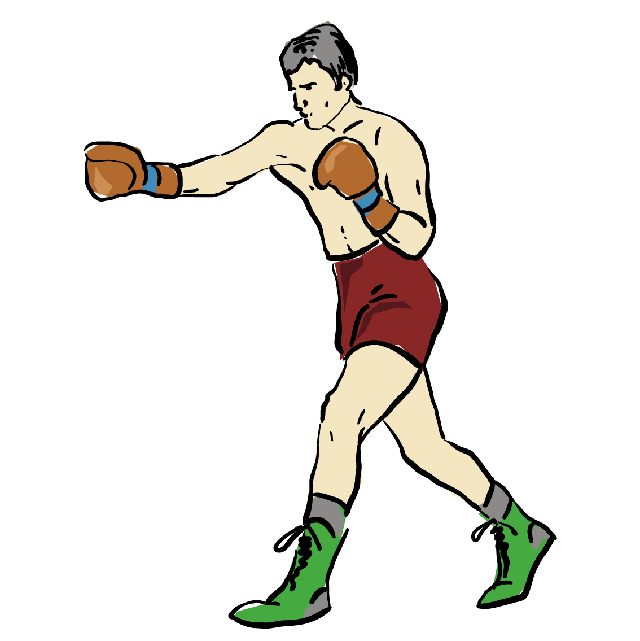
A boxer demonstrating proper punching form for speed testing
How to Use This Calculator
The punching speed calculator above measures your punch frequency, which is a fundamental component of hand speed in combat sports. Here's how to conduct the test and use the calculator effectively:
- Set up the test – Choose a test duration (10, 15, or 30 seconds are most common). Have a training partner ready to count your punches, or use video recording for accurate counting.
- Perform the test – Throw punches at maximum speed for the entire duration. You can throw any combination or stick to one punch type for standardized testing.
- Count accurately – Each hand movement that constitutes a full punch counts as one. Half-punches or aborted movements should not be counted.
- Enter your results – Input the total punches and test duration into the calculator to get your punches per second, punches per minute, and estimated hand velocity.
Pro Tip: For the most accurate and consistent results, perform the test 3 times with adequate rest between attempts, and use your best score. Testing on a heavy bag provides more realistic conditions than shadowboxing.
Measuring Punching Speed with Radar
Procedure (radar): Radar can be used for measuring throwing speed, so it should also be able to determine movement speed of any object, including the hand. The radar should be placed in front of the person being tested, in direct line of the punch. Peak speed only is recorded. See more information about radar for sports testing.
Modern radar guns designed for baseball pitching can accurately measure punch velocity, typically ranging from 15-35 mph for trained boxers. The radar captures the peak velocity of the hand or glove during the punch extension phase.
Measuring Punching Speed with Video Analysis
Procedure (video): To determine hand speed (distance/time), you need both a distance and time measure, both can be measured from video. First of all you need to have collected the video footage in the correct manner. The camera should be placed so that you get a side-on view of the boxer. The camera should not be moving (no panning), so it is best to have it set up on a tripod. The zoom function should also not be used.
- Distance: You must have in the view of the video a standard distance measure for calibration - this can be a yardstick or some other object of known length that you hold up in the video frame, or markings on the ground a known distance apart. Using the on-screen calibration measure is just like using a scale measure on a map. If a three foot (36 inches) distance is one inch on the screen, the calibration ratio is 1:36. Everything in the same plane as the calibration measure will be 36 times bigger than what you can measure on the screen. Now simply measure how far the hand moves on the screen, and multiply that by the calibration ratio.
- Time: To convert the distance measure to speed, you need to know how long it took to move that distance. You need to find out the frame rate of the video (frames per second), usually 24, 25 or 30. The higher the frame rate of the video the more accurate measures you can get. For example the frame rate may be 25 frames per second, which means that there is 0.04 seconds between each frame. If the hand moves 2 inches between frames, that equates to a velocity of 50 inches/sec or 4.2 feet/sec.
Scoring: The standard unit of speed is meters per second (m/s) or feet per second (fps). For frequency testing, results are expressed as punches per second (pps) or punches per minute (ppm).
Target population: Boxing, MMA, kickboxing, Muay Thai, and other combat and hitting sports.
Understanding Your Results
Punch frequency is a key indicator of hand speed potential in combat sports. Here's how to interpret your results based on training level and experience:
How to Improve Your Punching Speed
Developing faster hands requires a combination of technique refinement, specific training methods, and consistent practice. Here are evidence-based strategies used by professional fighters:
Speed Bag Training
The speed bag is one of the most effective tools for developing rapid punch frequency. Start with a larger bag and progress to smaller sizes as your coordination improves. Focus on maintaining a consistent rhythm and gradually increasing tempo over training sessions.
Shadowboxing with Light Weights
Using 0.5-1 kg (1-2 lb) hand weights during shadowboxing can increase hand speed when the weights are removed. However, limit weighted sessions to 2-3 rounds to prevent shoulder fatigue and maintain proper technique. Never use weights heavier than 2 kg as this can alter punching mechanics.
Plyometric Training
Upper body plyometrics such as medicine ball throws, clap push-ups, and explosive dumbbell punches develop the fast-twitch muscle fibers responsible for rapid movement. Incorporate 2-3 plyometric sessions per week during the off-season, reducing to 1-2 during fight preparation.
Relaxation and Technique
Tension is the enemy of speed. Many fighters actually punch slower because they're too tense. Practice throwing punches with relaxed shoulders and arms, only tensing at the moment of impact. This "snap" technique maximizes velocity while conserving energy.
Sport-Specific Applications
Different combat sports emphasize various aspects of punching speed:
Boxing
Pure boxing places the highest premium on hand speed, particularly for the jab. Elite boxers like Muhammad Ali, Sugar Ray Leonard, and Manny Pacquiao were renowned for exceptional punch frequency, often throwing 8-10 punches per second in rapid combinations.
MMA (Mixed Martial Arts)
MMA fighters need to balance punching speed with defensive awareness of takedowns and kicks. Punch frequency in MMA tends to be slightly lower than boxing but requires greater variety in angles and setups.
Kickboxing and Muay Thai
These sports incorporate kicks, knees, and elbows alongside punches. Hand speed remains important but is part of a broader striking arsenal. Thai boxers often develop exceptional clinch-range hand speed for close-quarters exchanges.
Frequently Asked Questions
What is a good punching speed for boxing?
Elite professional boxers can throw 8-12 punches per second during rapid combinations, with individual punch velocities of 25-32 mph (40-51 km/h). Amateur boxers typically achieve 4-6 punches per second. For a 10-second test, throwing 60+ punches indicates advanced-level hand speed.
How accurate is the punch frequency test?
When conducted properly with accurate counting, the punch frequency test provides reliable and repeatable results. Video recording your test allows for precise counting and is recommended for tracking progress over time. The test has good test-retest reliability when standardized conditions are maintained.
How often should I test my punching speed?
For tracking training progress, test monthly during active training periods. More frequent testing (weekly) can be useful during intensive speed development phases. Always test under consistent conditions—same time of day, after similar warm-up, and with adequate rest.
Does punching speed decrease with fatigue?
Yes, punch frequency typically decreases 15-30% as fatigue accumulates during a fight or extended training session. Testing both fresh and fatigued states can provide valuable information about your speed endurance and conditioning needs.
What's the difference between punch speed and punch frequency?
Punch speed (velocity) measures how fast a single punch travels, typically in m/s or mph. Punch frequency measures how many punches you can throw in a given time period, expressed as punches per second. Both are important—you need fast individual punches AND the ability to throw them rapidly in succession.
Can genetics affect punching speed?
Genetics influence your baseline fast-twitch muscle fiber composition, which affects speed potential. However, proper training can significantly improve punching speed regardless of genetic starting point. Most fighters can increase their punch frequency by 20-40% through dedicated speed training over 6-12 months.
References
- Loturco, I., et al. (2016). "Punch velocity and punch force in elite and amateur boxers." Journal of Strength and Conditioning Research.
- Smith, M. S. (2006). "Physiological profile of senior and junior England international amateur boxers." Journal of Sports Science and Medicine.
- Pierce, J. D., et al. (2006). "Direct measurement of punch force during six professional boxing matches." Journal of Quantitative Analysis in Sports.
- Guidetti, L., et al. (2002). "Physiological responses and energy cost of boxing exercises." European Journal of Applied Physiology.
- Chaabène, H., et al. (2015). "Physical and physiological attributes of wrestlers: An update." Journal of Strength and Conditioning Research.
- Turner, A. N., et al. (2011). "Enhancing punching performance through strength and conditioning." Strength and Conditioning Journal.
Similar Tests
- Measuring punching power
- Quick Strike Test — punch a boxing bag as fast and as hard as possible for a set time period.
- Arm Crank Ergometer Test with 2 x 15 second intervals.
- Plate Tapping Test — move the hand back and forth between discs as quickly as possible.
Related Pages
 Any comments, suggestions, or corrections? Please let us know.