2 km Rowing Ergo Calculator
Quick Answer
This calculator analyzes your 2km rowing ergometer performance using the standard Concept 2 power formula, providing pace splits, power output in watts, and percentile rankings based on competitive rowing standards.
- Calculates your 500m split pace and average power output instantly
- Based on the Concept 2 ergometer power-pace relationship formula
- Provides weight-adjusted watts for fair comparison across athletes
The 2 km (2000 meters) Rowing Ergo Test is part of the eTID Talent Identification Testing Program for rowing, and their protocol is listed here. There is also a 5km and 500m ergo test.
How to Use This Calculator
Follow these simple steps to analyze your 2km rowing ergometer performance:
- Enter Your 2km Time - Input your total time in minutes and seconds. Use the presets if you want to see example calculations for elite or competitive times.
- Add Your Body Weight - This enables weight-adjusted power calculations, which provide fairer comparisons between athletes of different sizes. Toggle between metric (kg) and imperial (lbs) units as needed.
- Select Your Gender - Performance standards differ between male and female athletes, so selecting your gender ensures accurate percentile rankings.
- Calculate - Click the Calculate button to see your comprehensive performance analysis including pace, power, and ranking.
Test Purpose and Protocol
Test purpose: This test is designed to completely exhaust all energy production pathways under race conditions.
Equipment required: Concept IID rowing ergometer (or equivalent). A specific drag factor needs to be set (see comments below).
Pre-test: Explain the test procedures to the subject. Perform screening of health risks and obtain informed consent. Prepare forms and record basic information such as age, height, body weight, gender and test conditions. Check and calibrate the equipment as required. Perform a standard warm-up. See more details of pre-test procedures.
Procedure: Ensure the correct drag factor is set correctly with the preferred display option selected on screen (see comments below). Ensure 500m splits are set on the PM3/4 prior to the trial. Sit ready to start the 2 km test. The aim of the test is to cover the 2 km in the shortest possible time, and you should be exhausted at the completion of the trial. Experience has shown that better scores are achieved with an even split rather than starting conservatively and then coming home strong, or going out too fast and not being able to complete the distance.
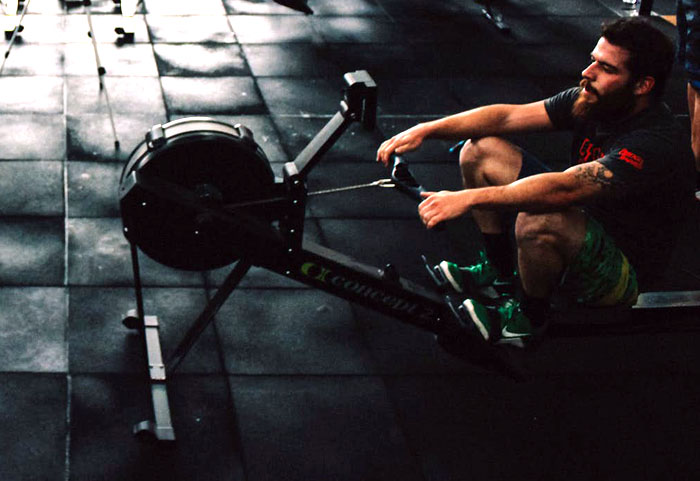 rowing ergometer event
Scoring: Record the time taken to complete the 2000 meters in minutes and seconds and the average stroke rate.
Target population: rowing
Understanding Your Results
The calculator provides several key metrics to help you understand your rowing performance:
500m Split Pace: This is your average time per 500 meters. It's the standard metric rowers use to compare performance and set training targets. Elite male rowers typically maintain splits under 1:35, while elite females aim for under 1:45.
Average Watts: Power output calculated using the Concept 2 formula: Power (watts) = 2.80 / pace³, where pace is in seconds per meter. This gives you an objective measure of your work output.
Weight-Adjusted Watts: Your power output divided by your body weight, expressed as watts per kilogram. This allows fair comparison between athletes of different sizes and is particularly important for lightweight rowing categories.
Performance Percentile: Shows where you rank compared to other rowers in your gender category. Based on aggregated performance data from competitive rowing events and Concept 2 world rankings.
Performance Standards
The following table shows general performance standards for 2km rowing ergometer times:
Important Testing Comments
- Strong verbal encouragement will help the subject achieve their maximal score.
- Drag factors should be set at 90 for females and 100 for males. Drag factors can be checked on the Concept IID rowing ergometer by following the menu prompts on the PM3/4 interface. The drag factor display will appear in the lower right display window. When the drag factor display is present, participants are to row lightly and adjust the damper setting to select the correct drag factor. Check with local staff to ensure the drag factor is set for the particular ergometer you are using.
- Good pacing is very important. Too fast a start can lead to increased metabolic acidosis that will have a negative effect on aerobic energy production during the dominant endurance portion of the race. This could lead to early fatigue and a deterioration in technique.
Pro Tip: For optimal pacing, aim for negative splits where your second 1000m is slightly faster than your first. This prevents early lactate accumulation and allows for a stronger finish.
The Science Behind the Calculator
The power calculation uses the standard Concept 2 formula that relates pace to watts:
Power (watts) = 2.80 / pace³
Where pace is expressed in seconds per meter. This cubic relationship means that small improvements in pace require significant increases in power output. For example, dropping your split from 2:00/500m to 1:55/500m requires approximately 13% more power.
The calorie calculation uses the standard rowing ergometer formula:
Calories/hour = (4 × watts) + 350
This accounts for both the mechanical work performed and the baseline metabolic cost of exercising at that intensity. Note that actual calorie burn varies based on individual factors including body composition and rowing efficiency.
Training Recommendations
Based on your 2km performance, here are evidence-based training strategies to improve your time:
If your time is over 8:00 (male) or 9:00 (female): Focus on building aerobic base through longer, steady-state rows of 30-60 minutes at a comfortable pace. Aim for 3-4 sessions per week.
If your time is 7:00-8:00 (male) or 8:00-9:00 (female): Incorporate interval training such as 8×500m with 2-minute rest, or 4×1000m with 3-minute rest. Maintain 2-3 steady-state sessions weekly.
If your time is under 7:00 (male) or 8:00 (female): Add race-pace work and anaerobic threshold training. Include 2×2000m at target pace with 8-minute rest, and pyramid intervals (500m, 1000m, 1500m, 1000m, 500m).
The Test in Action
- This test is part of the eTID Talent Identification Testing Program for rowing.
Frequently Asked Questions
What is a good 2km rowing time?
A good 2km time depends on your gender, age, and training background. For recreational male rowers, sub-8 minutes is a solid achievement, while competitive club rowers typically aim for sub-7 minutes. Elite male rowers achieve times under 6:20. For females, add approximately 45-60 seconds to these benchmarks.
How accurate is the watts calculation?
The watts calculation uses the official Concept 2 formula and is highly accurate for comparing performance on Concept 2 ergometers. Other ergometer brands may use different algorithms, so direct comparisons between brands should be made cautiously.
Why is the 2km test important for rowers?
The 2km test closely mimics the physiological demands of a competitive rowing race, which typically lasts 6-8 minutes. It tests both aerobic capacity and anaerobic power, making it the gold standard for assessing rowing fitness and talent identification.
What drag factor should I use?
For standardized testing, use a drag factor of 90 for females and 100 for males. For general training, most coaches recommend drag factors between 120-140, which better simulate on-water rowing conditions. The drag factor can be adjusted via the damper lever on the ergometer.
How often should I test my 2km time?
For training purposes, testing every 4-6 weeks allows sufficient time for measurable improvement while providing regular feedback. Competitive rowers often test at the beginning and end of training blocks, typically 3-4 times per year for formal assessments.
Does body weight affect my 2km time?
Yes, heavier athletes generally produce more absolute power but may have slower weight-adjusted scores. The lightweight categories in competitive rowing (under 72.5kg for men, under 59kg for women) use weight-adjusted metrics for fair comparison. Our calculator provides both absolute and weight-adjusted watts.
References
- Concept2. (2024). "Concept2 Ranking and Records." Concept2.com.
- Secher, N.H. (1993). "Physiological and biomechanical aspects of rowing." Sports Medicine, 15(1), 24-42.
- Ingham, S.A., et al. (2002). "Determinants of 2,000m rowing ergometer performance." European Journal of Applied Physiology, 88(3), 243-246.
- Mikulic, P. (2011). "Anthropometric and physiological profiles of rowers." Sports Medicine, 41(10), 859-876.
- Rowing Australia. (2023). "National Rowing Ergometer Standards." RowingAustralia.com.au.
- British Rowing. (2024). "Indoor Rowing Training Guide." BritishRowing.org.
Similar Tests
- 5km Rowing Ergometer Test — aim to cover the 5000m in the shortest possible time.
- 500m ergo test — aim to cover the 500m in the shortest possible time.
- Rowing Beep Test — incremental test performed on a rowing ergometer
Related Pages
- Other aerobic tests
- Rowing fitness testing
- Rowing Ergometers for Fitness Testing
- About the eTID Talent Identification Testing Program.
- ETID Fitness Testing for Rowing
- About the sport of rowing, which includes indoor rowing competitions
- Rowing at the Olympic Games
 Any comments, suggestions, or corrections? Please let us know.