Girth Measurement Calculator
Quick Answer
This calculator converts body girth measurements between centimeters and inches for 12 anatomical sites. Enter your circumference measurements to track athletic development and body composition changes.
- Converts measurements instantly between metric (cm) and imperial (inches)
- Covers all standard girth sites: chest, waist, hips, arms, legs, and more
- Calculates waist-to-hip ratio (WHR) when both measurements entered
Girths are circumference measures at standard anatomical sites around the body, measured with a tape measure. Girth measurements can be used in determining body size and composition, and to monitor changes in these parameters over time. Athletes and coaches use girth measurements to track muscle development, monitor training progress, and assess body composition changes throughout training cycles.
How to Use This Girth Calculator
This calculator helps athletes, coaches, and fitness professionals convert and track body circumference measurements. Follow these steps for accurate results:
- Select Your Unit System: Use the toggle at the top to switch between metric (centimeters) and imperial (inches) based on your measuring tape.
- Enter Your Measurements: Input values for any body sites you want to track. You don't need to fill all fields—enter only the measurements relevant to your assessment.
- View Real-Time Conversions: As you type, see instant conversions displayed below each input field.
- Calculate Results: Click "Calculate Results" to see a complete summary table with all entered measurements in both unit systems.
- Track and Share: Use the share, email, or print options to save your measurements for tracking progress over time.
Equipment Required for Girth Measurements
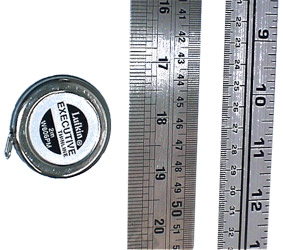
Equipment required: Flexible metal tape measure and pen for marking the skin. If a plastic or cloth tape is used, it should be checked regularly against a metal tape as others may stretch over time. The MyoTape is useful for the self-assessment of girth measurement, providing consistent tension across measurements.
Pre-test preparation: Explain the test procedures to the subject. Prepare forms and record basic information such as age, height, body weight, and gender. See more details of pre-test procedures.
Measurement procedure: First mark the sites to be measured. When recording, you need to make sure the tape is not too tight or too loose, is lying flat on the skin, and is horizontal. For descriptions of the procedure for measuring specific girths see the list below.
Standard Girth Measurement Sites
Below are the common anatomical sites used for girth measurements in athletic and clinical settings. Click on each link for a detailed description and photograph of the measurement being taken:
 head head |
 neck neck |
 forearm forearm |
 wrist wrist |
 hip hip |
 thigh (gluteal) thigh (gluteal) |
 ankle ankle |
 thigh (mid) thigh (mid) |
 arm-relaxed arm-relaxed |
 arm-flexed arm-flexed |
 chest chest |
 waist waist |
 calf calf |
shoulder |
Athletic Applications of Girth Measurements
Girth measurements serve different purposes across various athletic disciplines:
Strength Sports (Powerlifting, Weightlifting, Strongman)
Athletes in strength sports track arm, chest, and thigh girths to monitor hypertrophy from resistance training. Increases in these measurements typically correlate with strength gains. The difference between relaxed and flexed arm girth indicates muscle quality and peak contractile ability.
Combat Sports (Wrestling, Boxing, MMA, Judo)
Neck circumference is particularly important in combat sports for weight class determination and injury prevention. Waist and hip measurements help athletes monitor their weight cut progress while maintaining performance. Many combat sports organizations use girth-based formulas to estimate body composition.
Endurance Sports (Running, Cycling, Triathlon)
Endurance athletes typically monitor waist and hip measurements to ensure they maintain appropriate body composition for their sport. Lower girth measurements relative to height often correlate with improved performance in weight-bearing endurance activities.
Team Sports (Football, Rugby, Basketball)
Position-specific girth targets help athletes optimize their physique for performance. For example, linemen in American football may target larger chest and thigh girths, while wide receivers focus on maintaining leaner measurements for speed.
Validity and Reliability of Girth Measurements
Validity: Girth measurements are sometimes used as a measure of body fat, but they are not a valid standalone predictor of body fat percentage. They are, however, a good measure of proportionality and body size. When combined with other measurements in validated formulas (such as the US Navy method), girths can provide reasonable body fat estimates.
Reliability: Factors that may affect reliability include changes to the testers, inconsistent tension on the tape, and incorrect landmarking (finding the correct anatomical sites for measurement). To improve reliability:
- Use the same tester for serial measurements when possible
- Mark anatomical landmarks with a pen before measuring
- Take two measurements at each site and average them if within 0.5cm
- Measure at the same time of day (preferably morning before exercise)
- Ensure consistent tape tension—snug but not compressing tissue
Advantages: Low costs involved in the testing procedure, and for many sites the measurement can be self-administered. No specialized laboratory equipment required.
Other comments: Girth measurements combined with skinfold measurements can give a clearer picture of changes in muscle and fat compositions and distribution. A common girth measure is the waist measure, used in determining waist to hip ratio (WHR), an important health indicator.
Frequently Asked Questions
How do I measure body girth accurately?
Use a flexible tape measure, keeping it flat against the skin without compressing tissue. Stand relaxed with muscles not flexed unless measuring flexed arm girth. Take measurements at consistent anatomical landmarks and record two readings within 0.5cm of each other for best accuracy.
What is a healthy waist circumference for athletes?
For general health, waist circumference below 102cm (40 inches) for men and 88cm (35 inches) for women indicates lower health risk. Athletes typically have lower waist measurements relative to their hip and chest measurements, with optimal values varying by sport and position.
How often should athletes measure body girths?
Athletes should measure girths every 2-4 weeks during training phases to track muscle development and body composition changes. More frequent measurements during weight cutting phases for combat sports may be appropriate. Consistency in measurement timing and technique is more important than frequency.
What is the difference between relaxed and flexed arm girth?
Relaxed arm girth measures the upper arm hanging naturally at the side, indicating baseline arm size and is used in body composition formulas. Flexed arm girth measures the bicep at maximum contraction, showing peak muscle development. The difference indicates muscle quality and contractile ability.
How do girth measurements relate to body fat percentage?
While girth measurements alone don't directly measure body fat, specific circumference formulas like the US Navy method use neck, waist, and hip girths with height to estimate body fat percentage. Combined with skinfold measurements, girths provide a comprehensive body composition picture. See our body fat from girths calculator.
Why is wrist girth important for body proportions?
Wrist circumference indicates bone frame size and is used in formulas like John McCallum's method to estimate ideal body proportions for athletes. Since wrist size doesn't change significantly with training, it provides a stable reference point for calculating target measurements for other body parts.
Can I measure my own girths or do I need assistance?
Many girth measurements can be self-administered, including waist, hips, thigh, calf, forearm, and wrist. Chest and back measurements are more accurate with an assistant. Tools like the MyoTape are designed for consistent self-measurement with standardized tape tension.
References
- Norton, K., & Olds, T. (1996). "Anthropometrica: A textbook of body measurement for sports and health courses." UNSW Press.
- Heyward, V.H., & Wagner, D.R. (2004). "Applied Body Composition Assessment." Human Kinetics.
- ISAK. (2001). "International Standards for Anthropometric Assessment." International Society for the Advancement of Kinanthropometry.
- Hodgdon, J.A., & Beckett, M.B. (1984). "Prediction of percent body fat for U.S. Navy men from body circumferences and height." Naval Health Research Center, Report No. 84-11.
- McCallum, J. (1974). "Keys to Progress." IronMan Magazine.
- Lohman, T.G., Roche, A.F., & Martorell, R. (1988). "Anthropometric Standardization Reference Manual." Human Kinetics.
Similar Tests
- Measurements of Body Breadths — Measures of body part breadth in the assessment of body composition.
- Using girth measures to calculate muscle mass
Related Pages
- A discussion about Body Size Testing
- Using MyoTape for girth measurement
- Other anthropometric tests
- Videos of Anthropometric Tests
 Any comments, suggestions, or corrections? Please let us know.